
AI Agents Are Now Buying and Selling — With Real Money

The Experiment That Should Have Every Small Business Owner Paying Attention
Anthropic, the company behind the AI assistant Claude, recently ran a quiet but remarkable experiment. They built a test marketplace where AI agents acted as both buyers and sellers, negotiating deals, exchanging real goods, and exchanging real money. No humans in the middle. Just software representing one party, talking to software representing another, and actually closing transactions.
If that sounds like science fiction, it isn't. And if you own a small business, freelance for a living, or are simply looking for new income streams, understanding what just happened could matter a great deal to your financial future.
What Actually Happened
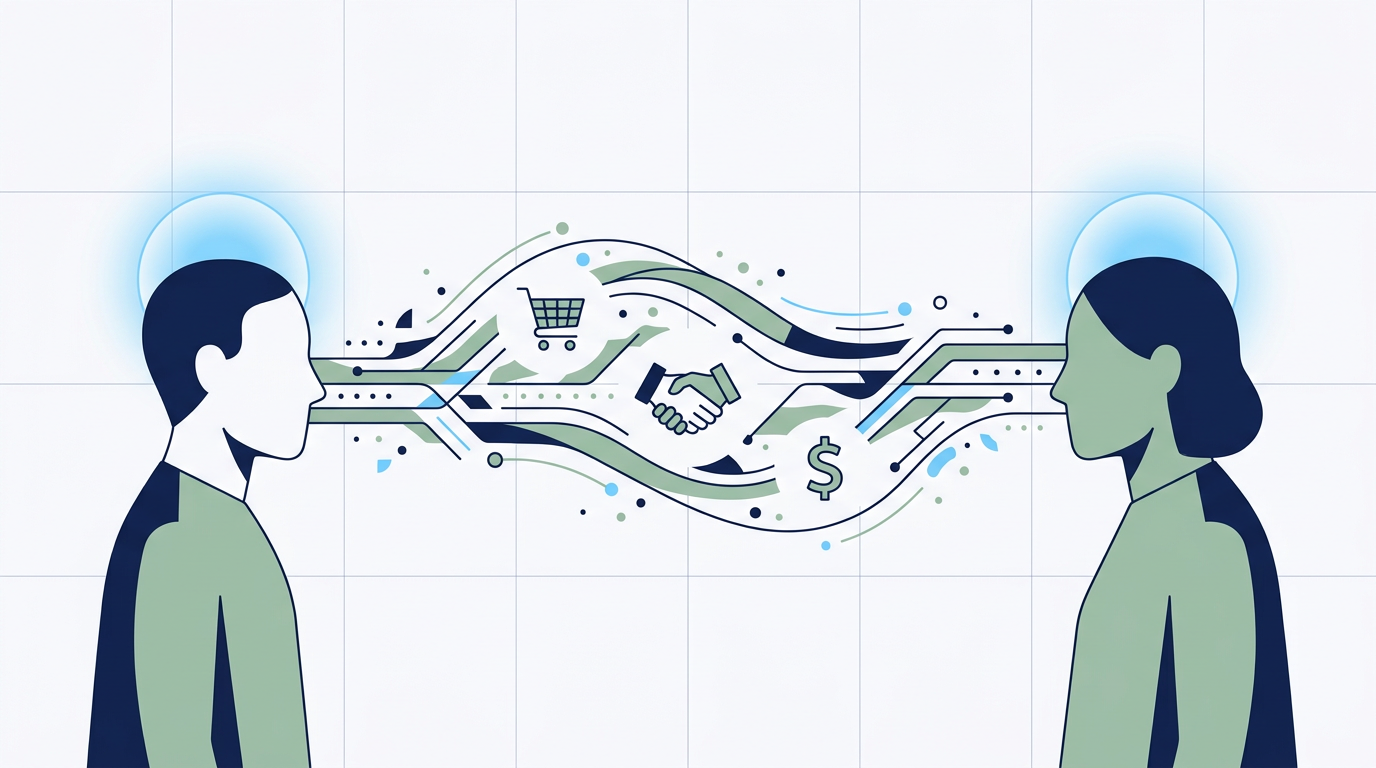
Think of it like a classified ads website, except instead of you posting "selling my old couch" and waiting for someone to email you, an AI agent posted on your behalf, fielded inquiries from other AI agents, negotiated price and terms, and finalized the deal. The agents on both sides were acting with real intent — representing real goods and real money.
This is what's called "agent-on-agent commerce." While that phrase sounds cold and technical, the implications are surprisingly human. It means AI is moving from being a helpful assistant that drafts your emails or generates images to becoming an active economic participant that can represent your interests in a marketplace while you're doing something else entirely.

Why This Changes the Income Equation
Let's say you're a retired teacher named Barbara who makes handmade jewelry and sells it online. Right now, selling online means managing listings, responding to inquiries, negotiating with wholesale buyers, and tracking orders. That's a part-time job in itself.
Now imagine an AI agent that knows your pricing, your inventory, your shipping preferences, and your non-negotiables. It handles the back-and-forth with buyers — including other AI agents representing buyers — while you focus on actually making the jewelry. That's not a fantasy anymore. It's the direction this technology is actively moving.
Or consider a small marketing consultant who licenses his templates and frameworks to other businesses. An AI agent could manage his licensing storefront, vet incoming buyers, negotiate volume discounts, and process agreements — all without him lifting a finger. The AI doesn't sleep, doesn't forget to follow up, and doesn't get tired of answering the same question for the hundredth time.
The Honest Caveat
None of this is fully available to everyday people yet. Anthropic's marketplace was an internal experiment, not a product you can sign up for tomorrow. But experiments like this tend to move to market faster than most people expect. And the tools that allow regular people to build simple AI agents — things like Zapier, Make, and Claude itself — are already widely available and improving rapidly.
The important thing to understand is the direction of travel. A year ago, AI was mostly about generating content faster. Six months ago, it started booking appointments and answering customer questions. Now it's negotiating and transacting. The capability ladder is being climbed quickly.
What You Can Do Right Now
You don't need to wait for the full agent economy to arrive before preparing for it. A few practical steps make sense today.
First, get comfortable using AI tools in your existing work or side income. The people who benefit most from the next wave of AI commerce will be those who already understand how to work alongside these systems, not those who are just getting started when everything changes.
Second, think about which parts of your income-generating activities are repetitive and rule-based. Responding to the same customer questions, updating pricing, following up on inquiries — these are exactly the kinds of tasks that AI agents are being built to handle. Identifying them now means you'll know where to apply new tools when they arrive.
Third, don't panic about being replaced. The most likely outcome isn't that AI agents cut humans out of commerce — it's that people who use AI agents will outcompete people who don't. That's a meaningful distinction.
The age of AI as a passive helper is giving way to AI as an active economic actor. Anthropic just showed us a glimpse of where this is heading. The question isn't whether this changes how money gets made — it's whether you'll be positioned to benefit when it does.
Want more plain-English AI news?
AI Foresights covers the latest AI developments, side income ideas, and tool reviews — written for everyday professionals, not tech experts.
Was this guide helpful?
Be the first to rate — or add yours below
More from Make Money with AI


Get new guides every week
Real AI income strategies, tool reviews, and plain-English news — free in your inbox.